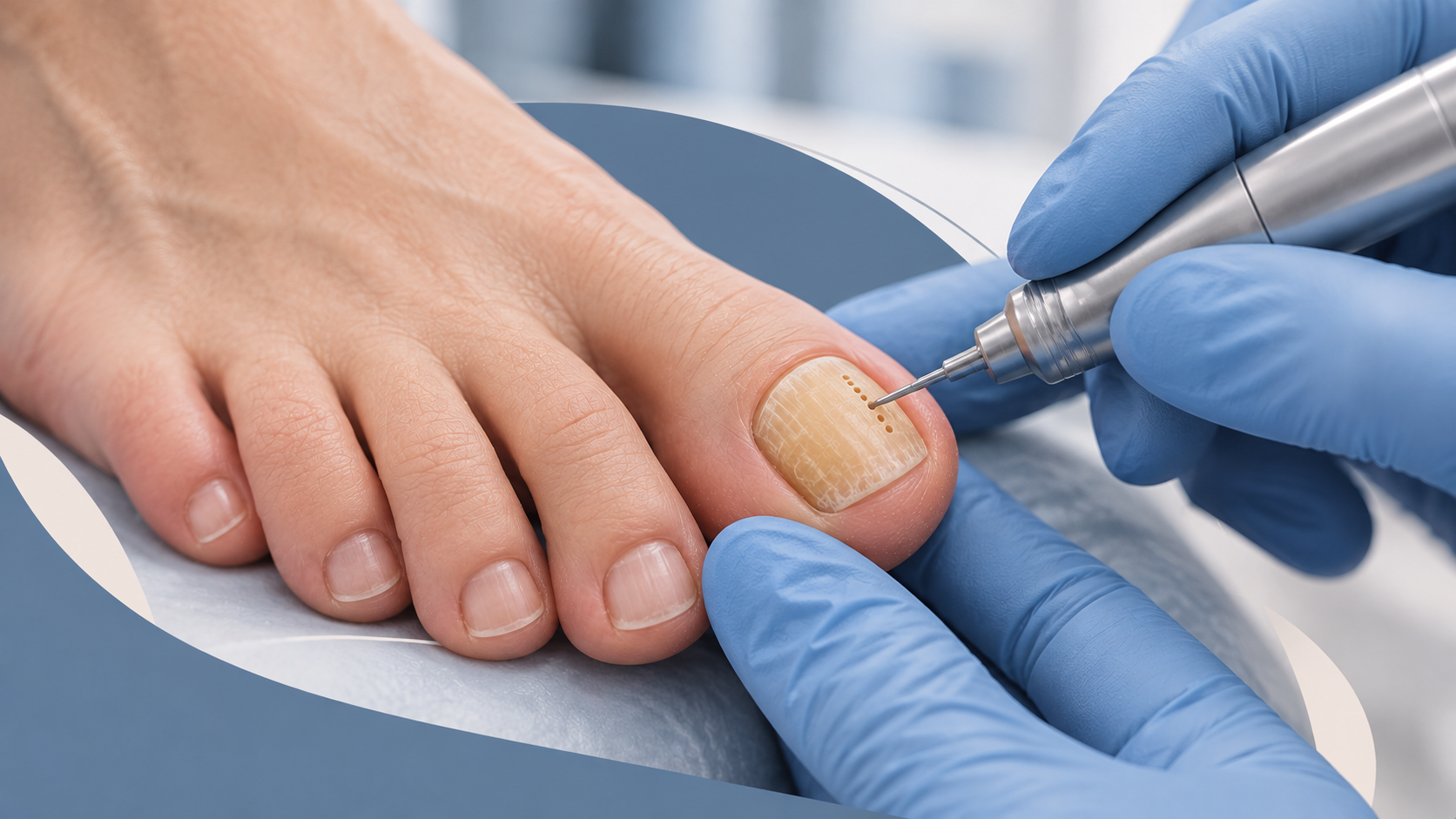
Lacuna Method® Fenestration
A targeted approach to fungal nail treatment

Consultation
We assess your nails, medical history and overall foot health to make sure Lacuna Method® Fenestration is suitable for you.
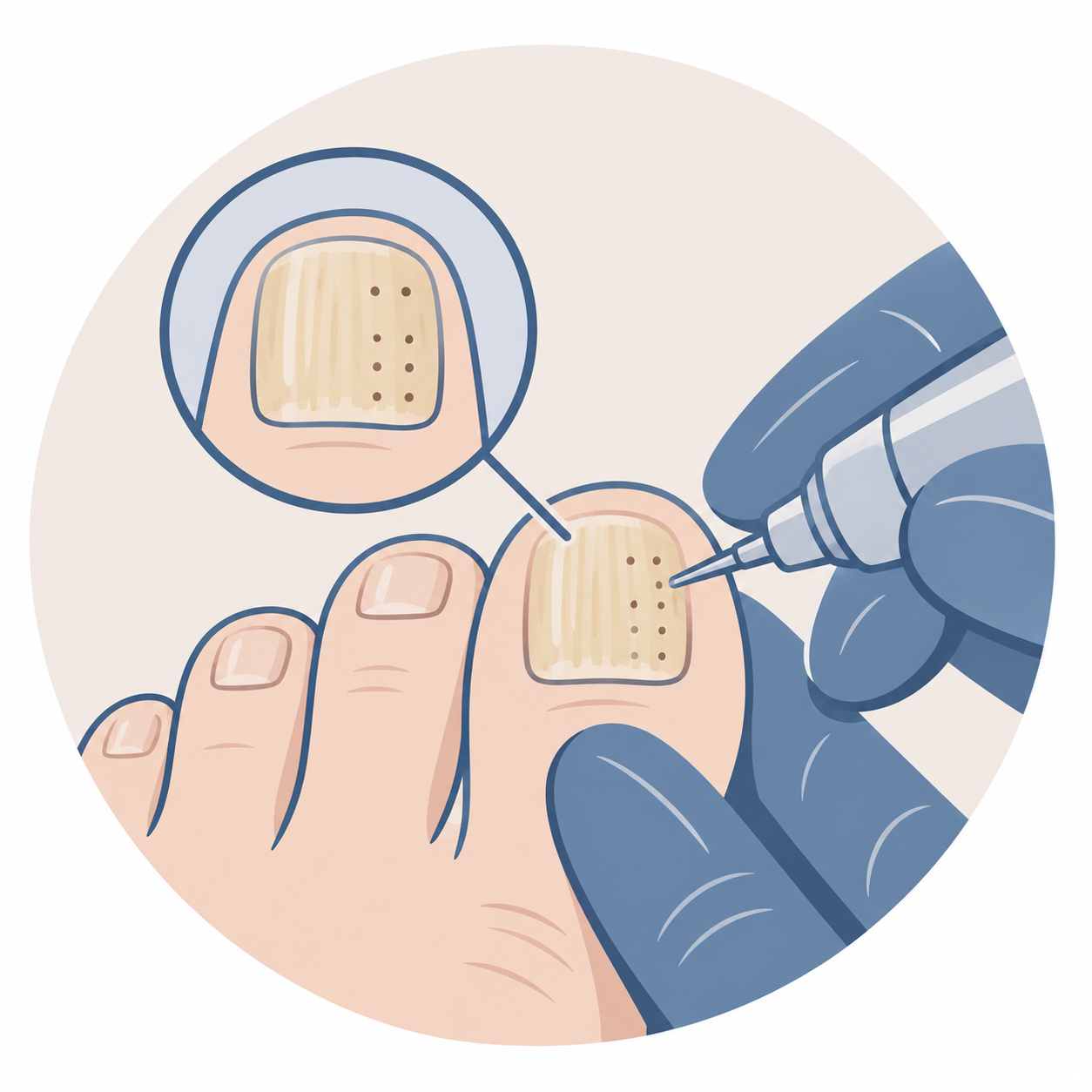
Fenestration
Tiny holes are carefully created through the affected nail plate, allowing topical antifungal treatment to reach the nail bed beneath

Review Appointments
We review your progress at regular intervals, reduce the affected nail where needed and repeat fenestration as the nail grows.
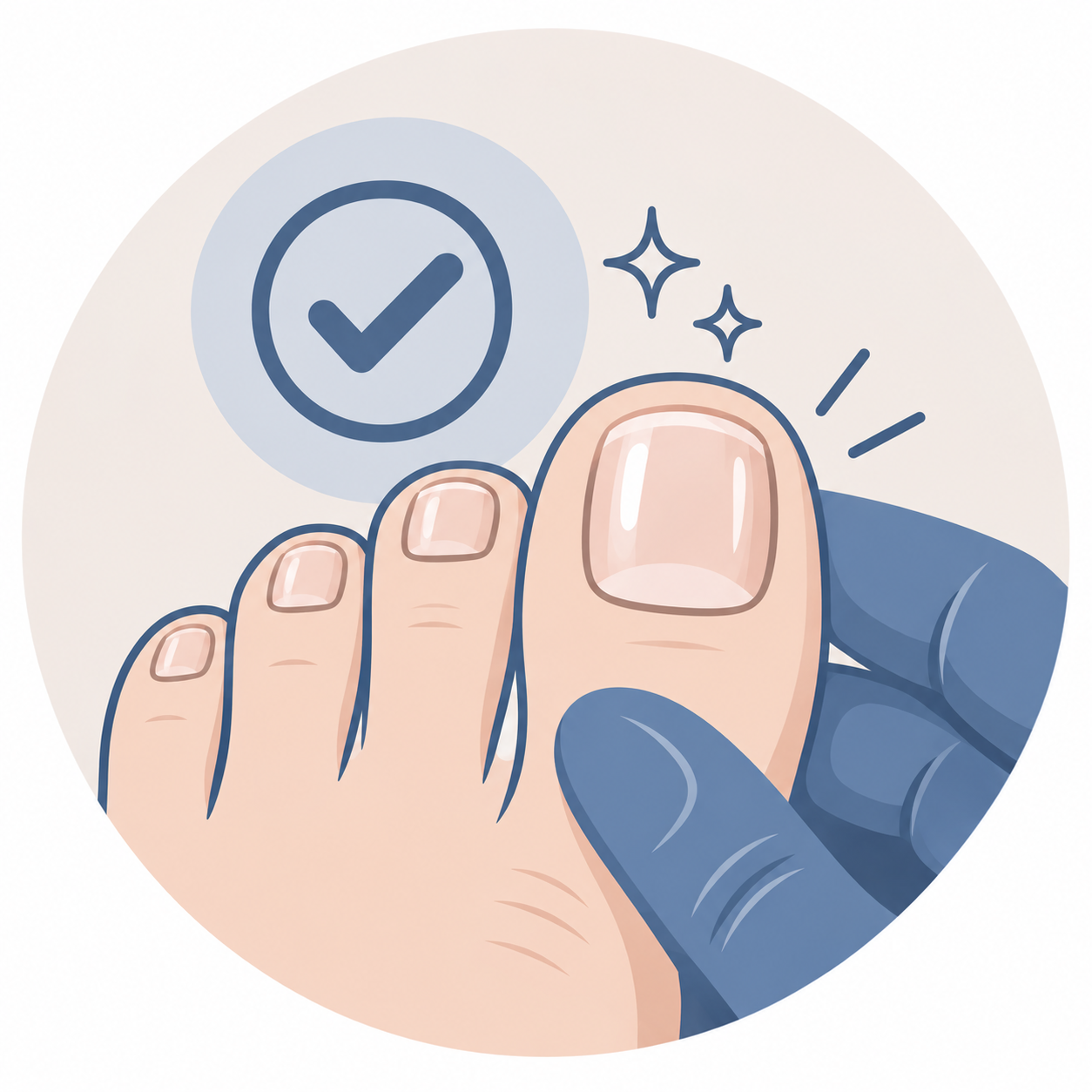
Healthier Nails
With consistent treatment and home care, we look for healthier, clearer nail growth gradually appearing from the base of the nail.
Lacuna Method® Fenestration
-
The Lacuna Method® is a form of nail fenestration used in the management of fungal nail infections (onychomycosis).
Using specialist equipment, a series of tiny holes are carefully created through the affected nail plate.
These small openings allow an antifungal treatment to pass through the nail and reach the nail bed beneath — rather than relying on the product to penetrate through the full thickness of the nail from the surface.
-
Toenails are designed to be tough and protective. Unfortunately, this also means that topical antifungal treatments can have difficulty penetrating through a thickened nail plate.
Fenestration creates small channels through the nail, providing a more direct route for your topical treatment.
As the healthier nail gradually grows forward, the affected nail can be monitored and managed throughout your treatment programme.
-
Before beginning treatment, we will assess your nails and discuss your medical history to determine whether Lacuna Method® Fenestration is suitable for you.
Fungal-looking nails are not always caused by a fungal infection, so it's important that we consider the appearance and history of the nail before recommending treatment.
Your clinician will explain the treatment, what you can realistically expect and the important role that home treatment and foot hygiene play in achieving the best possible outcome.
-
The affected nail is reduced and prepared before multiple tiny holes are created through the nail plate using specialist equipment.
The procedure is carefully controlled and the holes are made through the nail rather than the surrounding skin.
Following fenestration, your antifungal treatment can be applied through these openings, helping it reach beneath the nail plate.
The holes gradually grow forward with the nail and can be recreated during subsequent treatment sessions where required.
-
Fungal nails take time to improve because treatment relies on healthier nail gradually growing from the base of the nail.
Our Lacuna Method® programme typically involves five treatment sessions over approximately six months, usually spaced around six weeks apart.
At each appointment, we can assess your progress, reduce the affected nail where necessary and repeat the fenestration process.
Treatment does not stop when you leave the clinic. Consistent home treatment is an essential part of the programme.
-
Successful fungal nail management involves treating more than just the nail.
We'll provide you with advice on reducing the risk of reinfection, which may include:
Regular application of your recommended antifungal treatment
Treating fungal infection of the surrounding skin where present
Thoroughly drying your feet, particularly between the toes
Changing socks regularly
Washing suitable socks at higher temperatures where possible
Treating and rotating footwear
Avoiding walking barefoot in communal changing areas and around swimming pools
We'll explain your individual home-care routine as part of your treatment programme.
-
The damaged nail does not instantly become healthy following treatment. Instead, we are looking for healthier, clearer nail growth appearing from the base of the nail and gradually moving forward as the nail grows.
For a big toenail, complete replacement of the nail can take many months and sometimes more than a year.
Taking progress photographs can be particularly helpful, as gradual changes aren't always obvious when you look at your nails every day.
-
Not everyone will be suitable for fenestration.
Your clinician will assess your medical history, circulation, condition of the nail and any other relevant risk factors before recommending treatment.
In some circumstances, treatment may need to be delayed or an alternative approach recommended.
This is why we carry out an appropriate assessment before beginning your treatment programme.
-
Unfortunately, fungal nail infections can recur.
Fungus thrives in warm, moist environments and can remain present on the surrounding skin, socks and footwear. This is why good foot hygiene, treating associated athlete's foot and looking after your footwear are important even after the nail has improved.
We'll give you practical advice to help reduce the risk of reinfection.
A targeted approach to fungal nail treatment
Fungal nail infections can be stubborn, slow to improve and difficult to treat with topical products alone. Thickened or damaged nail can make it difficult for treatments applied to the surface to reach where they are needed.
At Affinity Podiatry, we offer Lacuna Method® Fenestration — a treatment designed to help topical antifungal treatment reach beneath the nail plate, where the fungal infection may be present.