
Lower Limb Vascular Screening
Understanding your circulation, protecting your foot health.

Circulation Assessment
Healthy circulation is essential for maintaining healthy feet and legs. Our vascular assessments evaluate blood flow to the lower limbs, helping identify signs of reduced circulation that may affect comfort, mobility and healing.

Identifying Vascular Concerns
Reduced blood flow can sometimes develop without noticeable symptoms. Vascular screening helps identify potential signs of Peripheral Arterial Disease (PAD), allowing appropriate advice, further investigation and onward referral where necessary.
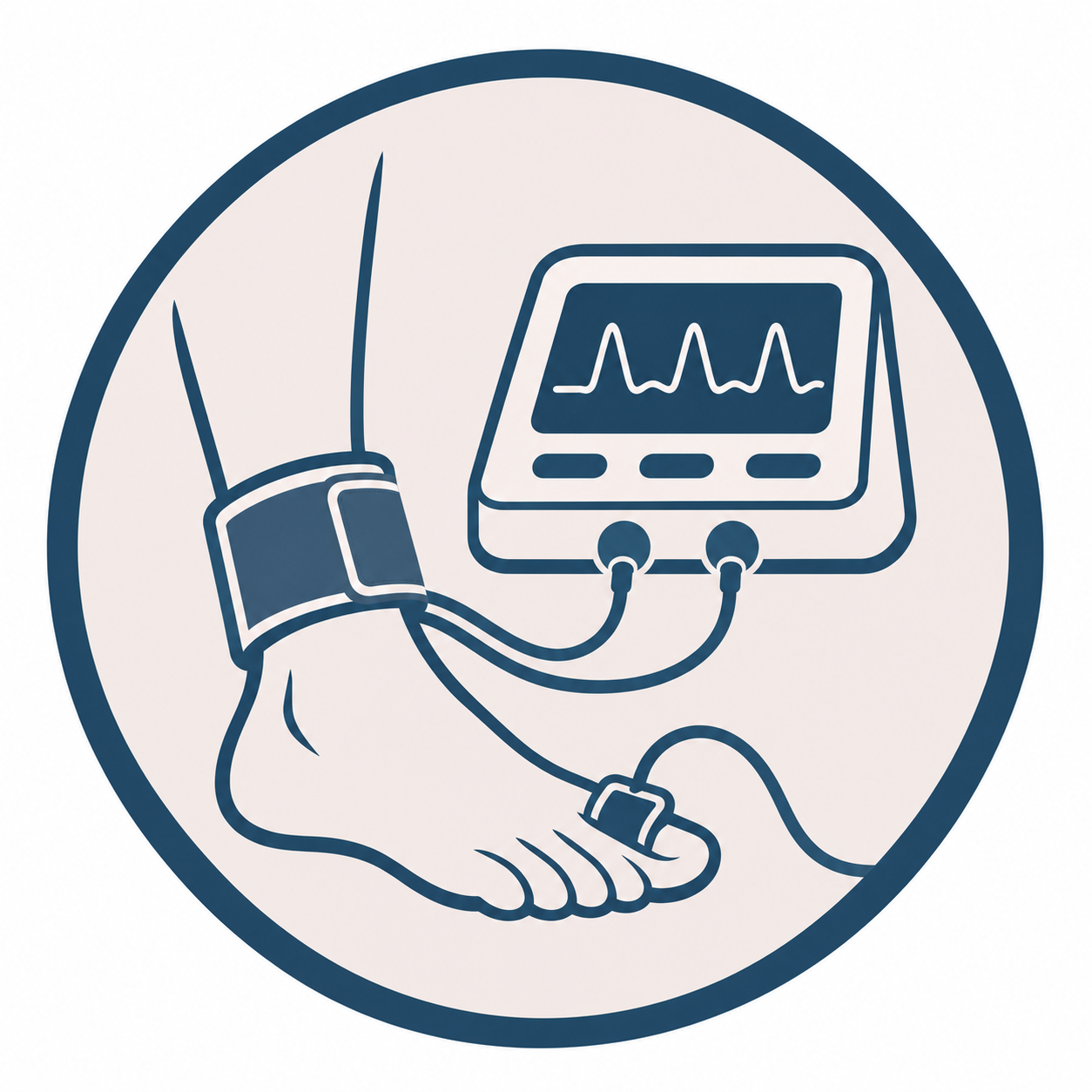
ABPI & TBPI Testing
Using specialist equipment, we measure and compare blood pressure in the arms, ankles and toes to assess lower limb circulation. These non-invasive tests are generally painless and provide valuable information about arterial blood flow.
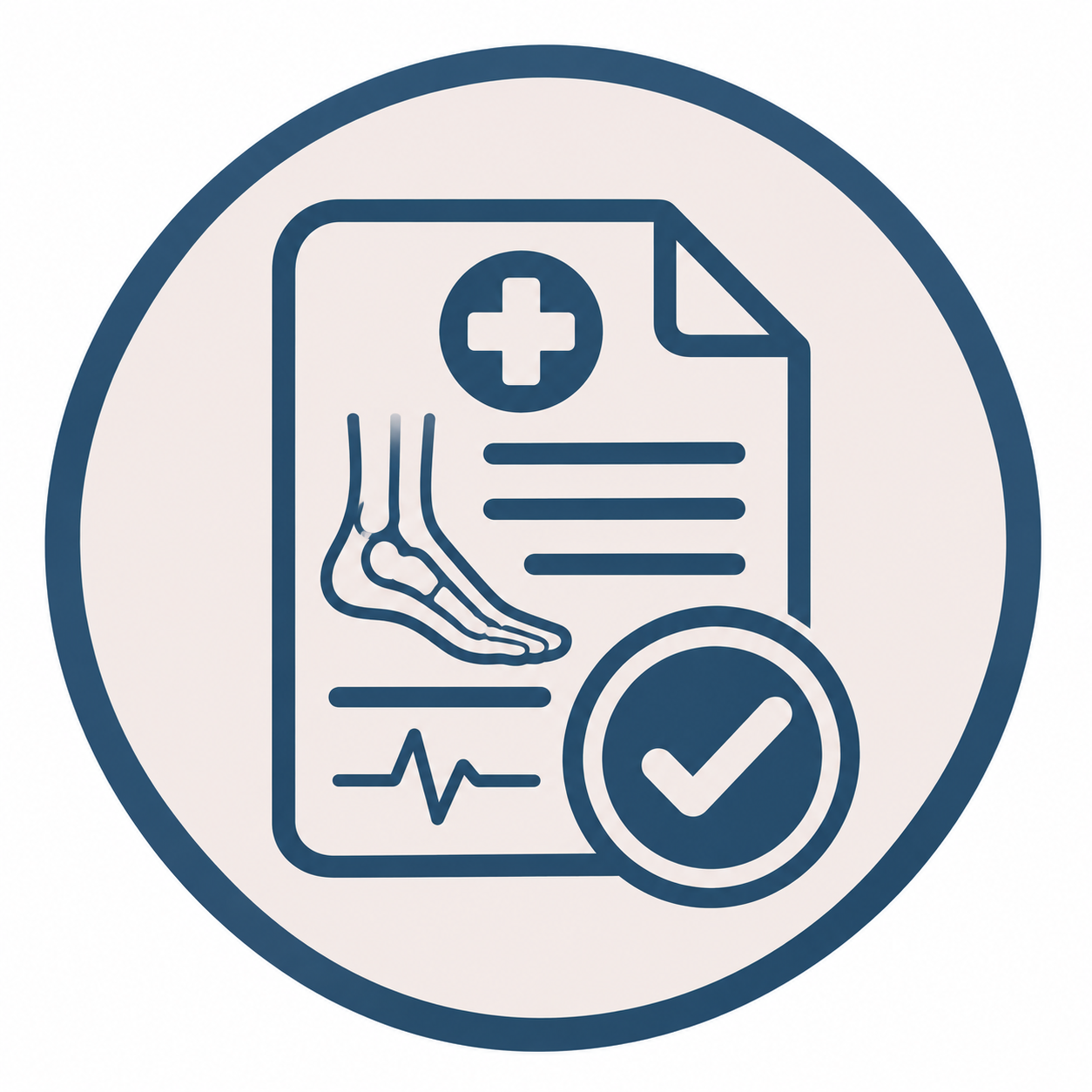
Detailed Clinical Reports
Following your assessment, we prepare a clinical report detailing your results, relevant findings and recommendations. With your consent, this can be shared with your GP, consultant or other healthcare professionals to support further investigation and continuity of care.
Lower Limb Vascular Screening
Good circulation is essential for maintaining healthy feet and lower limbs. Reduced blood flow can affect healing, cause discomfort and increase the risk of complications, particularly for individuals with diabetes or cardiovascular conditions.
At Affinity Podiatry, we offer lower limb vascular screening using Ankle Brachial Pressure Index (ABPI) and Toe Brachial Pressure Index (TBPI) assessments. These non-invasive tests help evaluate blood flow to the lower limbs and identify signs of Peripheral Arterial Disease (PAD).
Assessing circulation and vascular health in your feet and legs
-
Ankle Brachial Pressure Index (ABPI)
ABPI compares the blood pressure measured at your ankles with the blood pressure in your arms. This helps assess how effectively blood is travelling through the arteries supplying your legs and feet.
Toe Brachial Pressure Index (TBPI)
TBPI compares blood pressure in the toes with blood pressure in the arms. It is particularly useful when ABPI results may be unreliable, such as in individuals with diabetes or arterial calcification, where blood vessels can become less compressible.
Together, these assessments provide valuable information about lower limb circulation.
-
Vascular screening may be recommended for individuals experiencing:
Cold feet or changes in skin colour
Pain or cramping in the legs when walking
Foot or leg wounds that are slow to heal
Reduced or difficult-to-detect foot pulses
A history of diabetes or cardiovascular disease
Risk factors such as smoking, high blood pressure or high cholesterol
Vascular screening can also be beneficial when a clinical assessment identifies concerns about circulation, even if noticeable symptoms are absent.
-
Your podiatrist will begin by discussing your medical history, current symptoms and any relevant risk factors.
Blood pressure measurements are then taken from your arms, ankles and/or toes using specialist equipment. The procedure is non-invasive and generally painless, although you may feel some temporary pressure from the cuffs.
Your results will be explained, along with any recommendations for ongoing foot health or further medical assessment.
-
Peripheral Arterial Disease can develop gradually and may not always cause obvious symptoms.
Identifying potential circulation problems can help guide appropriate treatment decisions, support safer footcare and highlight when further investigation is required.
Please note: ABPI and TBPI are assessment tools and do not provide a definitive diagnosis on their own. Where results or symptoms suggest a vascular concern, we may recommend further assessment through your GP or an appropriate vascular service.
-
Following your vascular assessment, we will compile a detailed clinical report outlining your ABPI and/or TBPI results, relevant clinical findings and any recommendations for further investigation or management.
With your consent, this report can be shared with your GP, consultant or other healthcare professionals, helping to support communication between services and continuity of care.
Where results indicate potential vascular concerns, we can recommend appropriate onward referral for further assessment.
Our aim is to provide you with a clear understanding of your lower limb circulation while ensuring that relevant clinical information is available to the healthcare professionals involved in your care.